
A Harvest Returns poll of cattle producers finds near-unanimous opposition to the administration’s 90-day, tariff-free window for up to 300,000 metric tons of ground-beef imports—and a widespread expectation that the policy will delay, rather than accelerate, the recovery of the U.S. cattle herd.
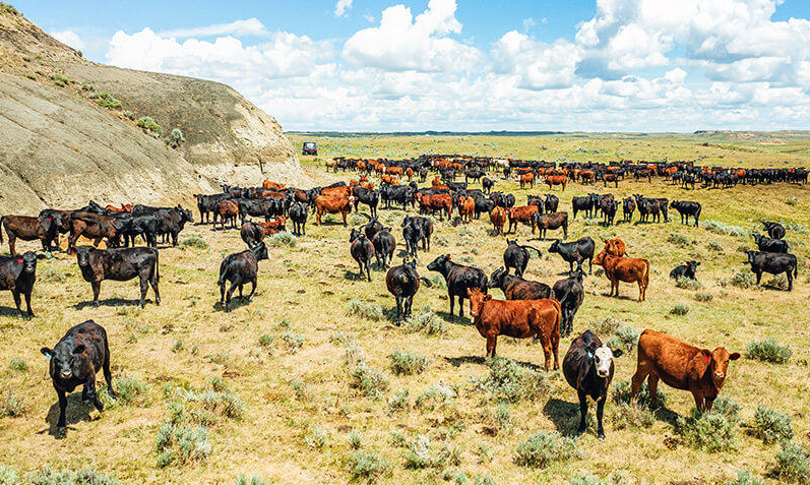
Cow-calf operations account for 94 percent of responses in Harvest Returns’ snapshot poll.
On August 21, 2026, the administration announced a 90-day window in which up to 300,000 metric tons of product for ground beef may enter the United States without an out-of-quota tariff, accompanied by a stated commitment that the imported product would be offered at a 25 percent discount to current market prices. The stated objective is to ease retail prices for consumers while the domestic cattle herd—now at its smallest size in decades—is rebuilt.
Harvest Returns asked cattle producers how they actually interpret that announcement. Operators in fourteen states responded in the days immediately following the news. The sample is small and self-selected and should be read as an early pulse of producer sentiment, not a statistically representative national survey. Even so, the pattern of answers is consistent enough to be informative for ranchers, lenders, and investors who are watching the same cattle cycle.

Who responded
Cow-calf businesses account for 94 percent of responses; a commercial feedlot accounts for the remainder. Herd sizes range from fewer than 50 head to between 1,000 and 4,999 head. One-third of respondents manage fewer than 50 head, and 78 percent manage fewer than 500—the inventory range that characterizes much of the independent cow-calf sector. Respondents’ operations are located in 14 states across the Western U.S.
A nearly uniform first reaction
Eighty-nine percent characterized their overall reaction as “strongly oppose the action.” An additional 6 percent selected “somewhat oppose,” bringing combined opposition to 94 percent. Six percent selected “neutral / insufficient information to judge.” No respondent supported the announcement.
That reading of producer sentiment is consistent with the public statements of the principal cattle organizations. The National Cattlemen’s Beef Association has argued that introducing additional below-market product discourages the very herd expansion the administration says it wants. The United States Cattlemen’s Association has likewise warned that the measure weakens domestic markets at a moment when inventories are historically tight. Cattle futures fell to multi-month lows on the day of the announcement.
Near-term prices and profitability
Asked what impact they expect on the prices they receive for cattle over the next three to six months, 78 percent anticipate downward pressure—split evenly between significant and moderate. Eleven percent anticipate little or no price impact. Six percent say the effect is too uncertain to estimate. Six percent—the sole commercial feeder in the sample—selected significant upward pressure, an outlier that may reflect a different position in the supply chain or an idiosyncratic reading of the announcement.
Profitability expectations are more divided than the opposition figures, but they still lean weaker. Two-thirds expect the policy to reduce the profitability of their particular cattle business over the next 12 months, split evenly between “significantly” and “moderately.” One-third expect no material effect. No respondent expects the policy to improve profitability.
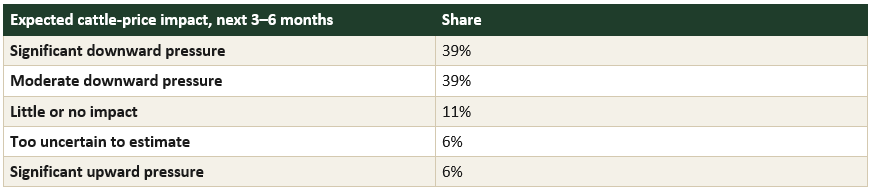
Table 1. Expected effect on prices received for cattle.

Table 2. Expected effect on the respondent’s own operation.
How operators say they will respond
Policy announcements matter only to the extent that they change behavior. On that point the poll is more mixed than the opposition numbers suggest, but the tilt is still toward contraction rather than expansion.
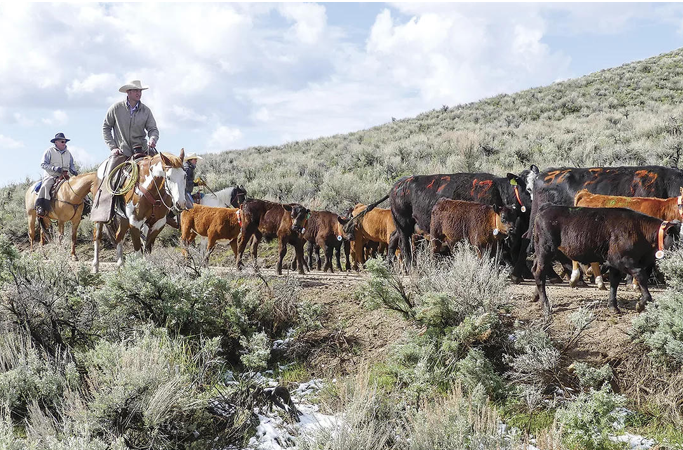
Cow-calf operators must decide whether to retain heifers, cull more aggressively, or hold to the original marketing calendar.
Regarding cattle currently owned or controlled, 39 percent intend to market on the original schedule. Twenty-two percent say they will reduce herd size more aggressively than normal through additional culls or breeding-stock sales. Seventeen percent plan to accelerate sales and market more cattle than previously planned. Eleven percent intend to retain more cattle and delay marketing. Another 11 percent plan to increase herd size by retaining extra replacements or purchasing additional stock.
On the next operational step, two answers dominate. Thirty-nine percent say they will delay or cancel planned herd expansion. An equal 39 percent say they will wait and monitor markets before taking an immediate step. Eleven percent plan to increase culling of breeding females or sell replacement heifers. The remaining responses describe a targeted cull of open and older cows while retaining heifers, or an intention to pay the announcement no mind and move forward.
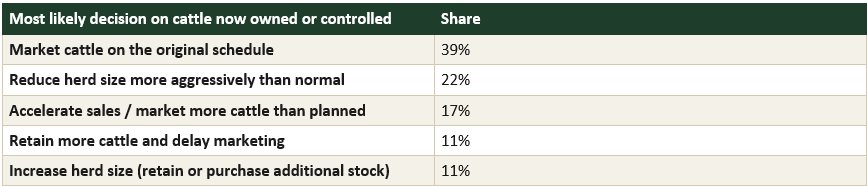
Table 3. Near-term marketing and inventory decisions.
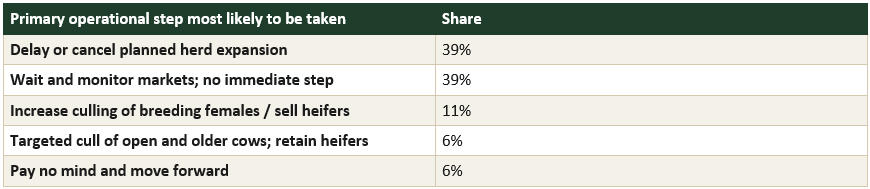
Table 4. Primary operational response to the announcement.
The long-term price paradox
The administration’s stated rationale is that a temporary import window can relieve consumer prices while giving the domestic herd room to grow. Half of the producers in this poll reject that sequencing. Fifty percent believe the action will ultimately raise long-term U.S. beef prices over a two-to-five-year horizon. Most of that group attributes the increase to a reduced incentive to rebuild the U.S. cattle herd; the rest cite increased market uncertainty and delayed expansion. One-third expect little lasting effect on the long-term price path. Seventeen percent are unsure. No respondent selected an option that long-term prices would fall.
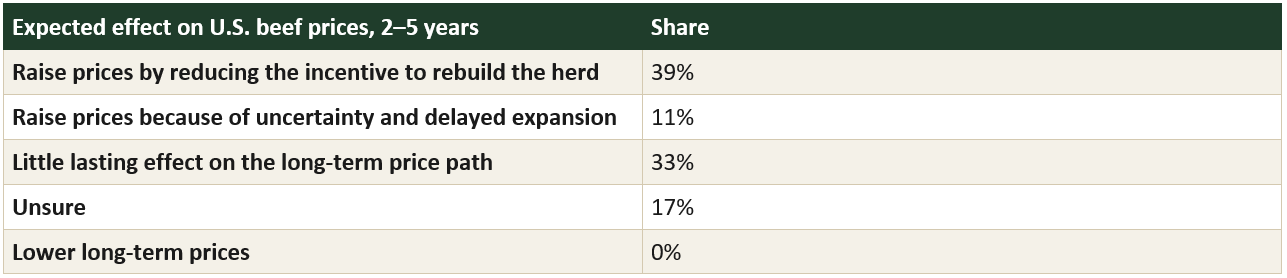
Table 5. Producer view of the two- to five-year price path.
Skepticism that consumers will see the discount
The announcement included a commitment that imported product would be sold at a 25 percent discount to current market prices. Respondents were asked whether that discount, if realized at the border, would result in meaningfully lower retail ground-beef prices for consumers. Ninety-four percent said no. None said yes.
Seventy-two percent believe most of the discount will be captured by packers, processors, or retailers. Twenty-two percent believe the volume is too small relative to total demand to move retail prices. Six percent are unsure. Independent analysts have made a related point: 300,000 metric tons over 90 days is a modest share of annual U.S. beef disappearance. Kansas State University agricultural economist Glynn Tonsor has estimated that the volume is on the order of 3 percent of U.S. beef demand. That does not make the announcement irrelevant to feeder and fed-cattle bids in a tight market; it does help explain why producers doubt a visible, lasting cut at the grocery case.

Table 6. Expected pass-through of the announced discount.
Trust in the policy signal
Asked how they would describe the administration’s current stance toward American cattle producers following the announcement, 50 percent selected “strongly unsupportive of U.S. ranchers.” Thirty-nine percent selected “mixed or inconsistent.” Six percent selected “somewhat unsupportive,” and 6 percent selected “somewhat supportive.” None selected “strongly supportive.”
That finding is as operationally important as the price forecast. Cow-calf expansion is a capital decision made under uncertainty. Operators retain heifers when they believe the next several calf crops will justify the opportunity cost of not selling those females today. A policy they read as unsupportive raises the discount rate they apply to that future income—even if the import window itself is temporary.
What the poll does—and does not—establish
Several caveats belong beside these figures. The sample is small, self-selected, and collected in the first days after the announcement, when attention and emotion are highest. Cow-calf operators account for 94 percent of responses; feedlot, stocker, and packer views are almost absent. The poll records stated intentions, not subsequent sales tickets. Intentions can soften as markets digest the actual volume, origin, and timing of any additional imports.
Those limits do not erase the central message. In this group, opposition is overwhelming, expected near-term cattle prices lean lower, planned expansion is more often deferred or watched than accelerated, and producers do not believe the advertised consumer benefit will materialize at the meat case. Half expect the long-run price effect, if any, to run in the opposite direction of the stated goal: higher, not lower, beef prices two to five years from now, because the incentive to rebuild the herd has been reduced. None expect long-term prices to fall.
Implications for ranchers and for capital
Harvest Returns exists to connect operators with investors who want to put capital to work in American agriculture. That mission does not require agreement with every federal trade decision. It does require a clear reading of how producers will manage risk when policy changes the bid.
Three implications follow from this snapshot.
First, working capital and refinancing conversations will matter more, not less, if calf and feeder prices soften into the fall and winter. Operators who accelerate sales or increase culls may generate cash now and face a thinner inventory later. Those who hold to the original calendar still need a plan if the bid moves against them.
Second, expansion that was already on the drawing board—additional cows, leased grass, a retained-ownership program, or a processing or direct-to-consumer step—is the first item many respondents say they will pause. Pause is not the same as cancellation. Operators who can finance expansion without stretching the balance sheet to a breaking point will be better positioned when the cycle turns, as it historically does after liquidation.
Third, the poll underscores a structural fact of this cattle cycle: the constraint is not consumer demand for beef. It is the time, forage, genetics, and capital required to put more cows on the ground. Import windows can change the price discovery process at the margin. They cannot substitute for a rebuilt domestic herd. Producers in this survey understand that distinction and are making decisions accordingly.
A note to operators considering their next step
If this announcement has caused you to revisit a planned expansion, a land or cattle purchase, or a refinancing, Harvest Returns can discuss debt and equity options that leave you in control of the operation. The firm has raised more than $20 million specifically for cattle businesses and works with operators who want patient capital rather than a forced change in management. Visit our producer page here.
Method note
Harvest Returns fielded an 11-question poll plus an optional contact field beginning August 23, 2026, with responses continuing through August 25. Questions covered overall reaction to the announcement; expected effects on cattle prices, operation-level profitability, and long-term U.S. beef prices; intended marketing and operational responses; expected retail pass-through of a 25 percent import discount; operation type; perceived administration stance toward U.S. producers; inventory size; and state of the primary operation. Percentages in this article are calculated on all complete responses received and are rounded to the nearest point. Optional contact information is held in confidence and is not reported here.
Harvest Returns is a Fort Worth–based platform that connects farmers, ranchers, and agribusinesses with investors seeking exposure to American agriculture. The views expressed by poll respondents are their own.