Trust in the policy signal
Asked how they would describe the administration’s current stance toward American cattle producers following the announcement, 50 percent selected “strongly unsupportive of U.S. ranchers.” Thirty-nine percent selected “mixed or inconsistent.” Six percent selected “somewhat unsupportive,” and 6 percent selected “somewhat supportive.” None selected “strongly supportive.”
That finding is as operationally important as the price forecast. Cow-calf expansion is a capital decision made under uncertainty. Operators retain heifers when they believe the next several calf crops will justify the opportunity cost of not selling those females today. A policy they read as unsupportive raises the discount rate they apply to that future income—even if the import window itself is temporary.
What the poll does—and does not—establish
Several caveats belong beside these figures. The sample is small, self-selected, and collected in the first days after the announcement, when attention and emotion are highest. Cow-calf operators account for 94 percent of responses; feedlot, stocker, and packer views are almost absent. The poll records stated intentions, not subsequent sales tickets. Intentions can soften as markets digest the actual volume, origin, and timing of any additional imports.
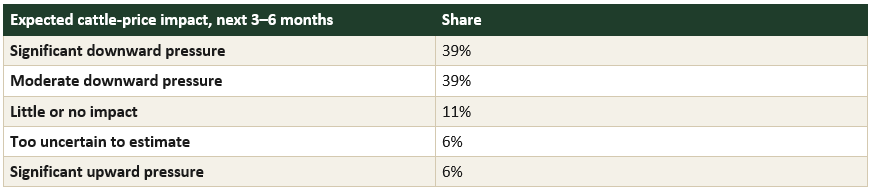
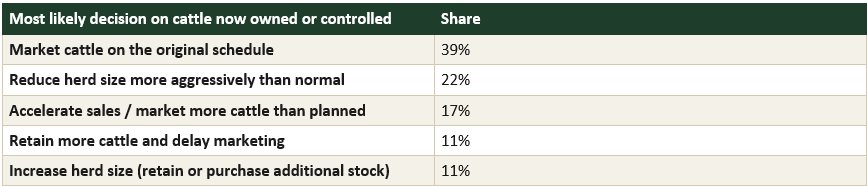
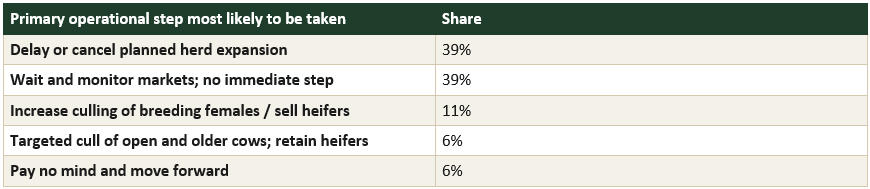
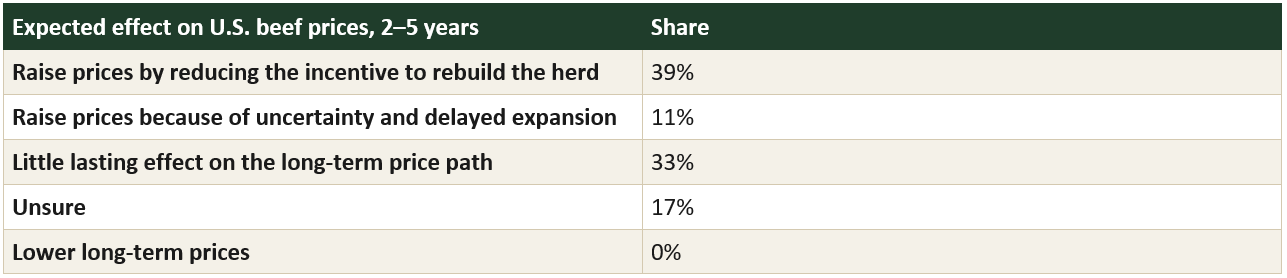
Those limits do not erase the central message. In this group, opposition is overwhelming, expected near-term cattle prices lean lower, planned expansion is more often deferred or watched than accelerated, and producers do not believe the advertised consumer benefit will materialize at the meat case. Half expect the long-run price effect, if any, to run in the opposite direction of the stated goal: higher, not lower, beef prices two to five years from now, because the incentive to rebuild the herd has been reduced. None expect long-term prices to fall.
Implications for ranchers and for capital
Harvest Returns exists to connect operators with investors who want to put capital to work in American agriculture. That mission does not require agreement with every federal trade decision. It does require a clear reading of how producers will manage risk when policy changes the bid.